Professional Contributions
P. Scott Richards, PhD, is the co-founder and president of the Bridges Institute for Spiritually Integrated Psychotherapies. He earned his Ph.D. in counseling psychology from the University of Minnesota and holds a Graduate Certificate in Creative Writing from Fairfield University in Connecticut. He has taught in graduate programs in psychology at the University of Minnesota-Duluth, Central Washington University, Brigham Young University (for 30 years), and the University of Phoenix. He served as President of the Society for the Psychology of Religion and Spirituality (Division 36) of the American Psychological Association (APA) and was elected a Fellow of Division 36 (in recognition of outstanding contributions to the science and profession of psychology). He is a fellow of APA’s Society for the Advancement of Psychotherapy (Division 29). Among his seven APA books about spirituality and psychotherapy is the best-selling citation classic A Spiritual Strategy for Counseling and Psychotherapy (with Allen E. Bergin; second edition, 2005). He also co-edited the recently published Handbook of Spiritually Integrated Psychotherapies (Richards, Allen, & Judd, 2023). He was awarded a $3.57 million grant from the John Templeton Foundation for research on outcomes and processes of spiritually integrated psychotherapies. He currently spends his time on research consulting, grant writing, and scholarly and creative writing.
Books
Richards, P. S., Allen, G. E. K., & Judd, D. K. (2023). Handbook of Spiritually Integrated Psychotherapies. American Psychological Association: Washington, D. C. https://www.apa.org/pubs/books/handbook-spiritually-integrated-psychotherapies
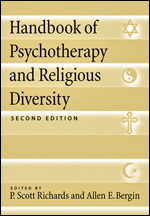
Richards, P. S. & Bergin, A. E. (Eds.). (2014). Handbook of Psychotherapy and Religious Diversity (2nd ed.). American Psychological Association: Washington, D. C. https://www.apa.org/pubs/books/4317338
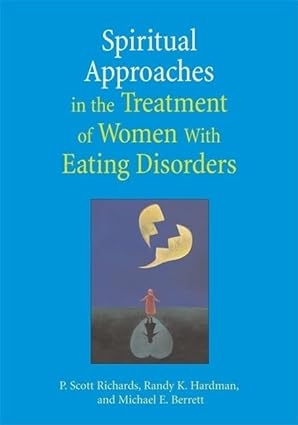
Richards, P. S., Hardman, R. K., & Berrett, M. E. (2007). Spiritual Approaches in the Treatment of Women with Eating Disorders. American Psychological Association: Washington, D. C.
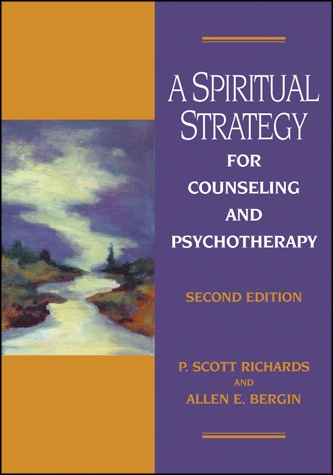
Richards, P. S., & Bergin, A. E. (2005). A Spiritual Strategy for Counseling and Psychotherapy (2nd edition). American Psychological Association: Washington, D. C. https://www.apa.org/pubs/books/4317077
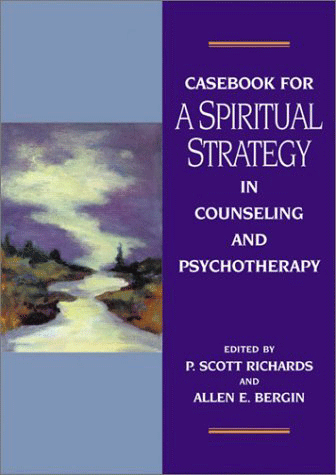
Richards, P. S., & Bergin, A. E. (Eds.). (2004). Casebook for a Spiritual Strategy in Counseling and Psychotherapy. American Psychological Association: Washington, D.C. https://www.apa.org/pubs/books/4317026
Richards, P. S. & Bergin, A. E. (Eds.). (2000). Handbook of Psychotherapy and Religious Diversity. American Psychological Association: Washington, D. C.
Richards, P. S. & Bergin, A. E. (1997). A Spiritual Strategy for Counseling and Psychotherapy. American Psychological Association: Washington, D. C.
Selected Journal Articles
Richards, P. S., Jones, R. S., & Sanders, P. W. (2025). Improving psychotherapists’ spiritual and religious competencies: Evaluation of a live videoconferencing training program. Psychotherapy. Advance online publication. https://doi.org/10.1037/pst0000584
Currier, J. M., McDermott, R. C., Sanders, P., & Richards, P. S. (2025). Spiritual struggles drive psychological distress in psychotherapy: Replication of findings using a practice-research network. Psychotherapy. 62(3), 424–431. https://doi.org/10.1037/pst0000581
Currier, J. M., McDermott, R. C., Sanders, P., Barham, M., Owen, J., Saxon, D., & Richards, P.S. (2024). Practice-based evidence for spiritually integrated psychotherapies: Examining trajectories of psychological and spiritual distress. Journal of Counseling Psychology, 71(4), 291 303. https://doi.org/10.1037/cou0000727
Currier, J. M., Swift, J. K., Sanders, P., & Richards, P. S. (2024). Preventing dropout in spiritually integrated psychotherapies: What are the effective methods of attending to clients’ spirituality? Psychotherapy, 61(3), 184-190. https://doi.org/10.1037/pst0000530
Richards, P. S., & Barkham, M. (2022). Enhancing the evidence base for spiritually integrated psychotherapies: Progressing the paradigm of practice-based evidence. Psychotherapy, 59(3), 303–306. https://doi.org/10.1037/pst0000438
Richards, P. S., Caoili, C. L., Crowton, S. A., Berrett, M. E., Hardman, R. K., Jackson, R. N., & Sanders, P. W. (2018). An exploration of the role of religion and spirituality in the treatment and recovery of patients with eating disorders. Spirituality in Clinical Practice, 5(2), 88–103. https://doi.org/10.1037/scp0000159
Allen, G. E. K., Wang, K., Richards, P. S., Ming, M. & Suh, H. N. (2018). Religious discrimination scale: Development and initial psychometric evaluation. Journal of Religion and Health. https://doi.org/10.1007/s10943-018-0617-z
Sanders, P. W., Richards, P. S., & McBride, J. A. (2017). Development of the clinically adaptive multidimensional outcome survey. Psychotherapy Research, https://doi.org/10.1080/10503307.2016.1277039
Richards, P. S. (2016). Psychotherapy and Religious Values: Remembering Allen E. Bergin’s Legacy. Open Theology. 2, 876-880. https://doi.org/10.1515/opth-2016-0066
Richards, P. S, Sanders, P. W., Lea, T., McBride, J. A., Allen, G. E. K. (2015). Bringing spiritually oriented psychotherapies into the health care mainstream: A call for worldwide collaboration. Spirituality in Clinical Practice, 2, (3), 169-179. https://doi.org/10.1037/scp0000082
Sanders, P. W., Richards, P. S., McBride, J. A., Lea, T., Hardman, R. K., Barnes, D. V. (2015). Processes and outcomes of theistic spiritually oriented psychotherapy: A practice-based evidence investigation. Spirituality in Clinical Practice, 2 (3), 180-190. https://doi.org/10.1037/scp0000083
Lea, T., Richards, P. S., Sanders, P. W., McBride, J. A., Allen, G. E. K. (2015). Spiritual pathways to healing and recovery: An intensive single-N study of an eating disorder patient. Spirituality in Clinical Practice, 2 (3), 191-201. https://doi.org/10.1037/scp0000085
Sanders, P. W., Allen, G. E. K., Fischer, L., Richards, P. S., Morgan, D. T., & Potts, R. W. (2015). Intrinsic religiousness and spirituality as predictors of mental health and positive psychological functioning in Latter-day Saint adolescents and young adults. Journal of Religion and Health, 54 (3), 871-887. https://doi.org/10.1007/s10943-015-0043-4
Hansen, K. L., & Richards, P. S. (2012). Ethics of respecting a client’s agency and values in treatment: Perspectives from a theistic spiritual view of counselling. Counselling and Spirituality/Counseling et Spiritualité, 31, 75-93.
O’Grady, K. A., & Richards, P. S. (2011). The role of inspiration in scientific discovery and scholarship: Views of theistic scientists. Explore, 7, 354-362. https://doi.org/10.1016/j.explore.2011.08.004
Bartz, J. D., Richards, P. S., Smith, T. B., & Fisher, L. (2010). A 17-year longitudinal study of religion and mental health. Mental Health, Religion & Culture, 13 (7), 683-695. https://doi.org/10.1080/13674670801944966
Richards, P. S., & Worthington, E. L. Jr. (2010). The need for evidence-based, spiritually oriented psychotherapies. Professional Psychology: Research and Practice, 41, 363-370. https://doi.org/10.1037/a0019469
O’Grady, K. A., & Richards, P. S. (2010). The role of inspiration in the helping professions. Psychology of Religion and Spirituality, 2, 57-66. https://doi.org/10.1037/a0018551
Richards, P. S. (2009). Toward religious and spiritual competence for psychologists: Some reflections and recommendations. Professional Psychology: Research and Practice, 40 (4), 389-391.
Gonsiorek, J. C., Richards, P. S., Pargament, K. I., & McMinn, M. R. (2009). Ethical challenges and opportunities at the edge: Incorporating spirituality and religion into psychotherapy. Professional Psychology: Research and Practice, 40 (4), 385-395.
Richards, P. S., Smith, M. H., Berrett, M. E., O’Grady, K. A., & Bartz, J. D. (2009). A theistic spiritual treatment approach for women with eating disorders. Journal of Clinical Psychology: In Session, 65, 172-184.
Smith, T. B., Bartz, J. D., & Richards, P. S. (2007). Outcomes of religious and spiritual adaptations to psychotherapy: A meta-analytic review. Psychotherapy Research, 17, 643-655.
Berrett, M. E., Hardman, R. K., O’Grady, K. A., & Richards, P. S. (2007). The role of spirituality in the treatment of trauma and eating disorders: Recommendations for clinical practice. Eating Disorders: Journal of Treatment and Prevention, 15, 373-389.
Richards, P. S., Berrett, M. E., Hardman, R. K., & Eggett, D. L. (2006). Comparative efficacy of spirituality, cognitive, and emotional support groups for treating eating disorder inpatients. Eating Disorders: Journal of Treatment and Prevention, 14, 401-415. https://doi.org/10.1080/10640260600952548
Richards, P. S., Smith, T. B., Schowalter, M., Richard, M., Berrett, M. E., & Hardman, R. K. (2005). Development and validation of the Theistic Spiritual Outcome Survey. Psychotherapy Research, 15 (4), 457-469. https://doi.org/10.1080/10503300500091405
Richards, P. S. (2000). The faith and example of an academic clinical psychologist: Allen Bergin as mentor. Journal of Psychology and Christianity, 19, 309-313.
Richards, P. S., Hardman, R., Frost, H., Clark-Sly, J., Berrett, M., & Anderson, D. (1997). Spiritual issues and interventions in the treatment of patients with eating disorders. Eating Disorders: Journal of Treatment and Prevention, 5, 261-279.
Richards, P. S. & Lonborg, S. D. (1996). Development of a method for studying thematic content of psychotherapy sessions. Journal of Consulting and Clinical Psychology, 64, 701-711. https://doi.org/10.1037/0022-006X.64.4.701
Richards, P. S. & Potts, R. (1995). Using spiritual interventions in psychotherapy: Practices, successes, failures and ethical concerns of Mormon psychotherapists. Professional Psychology: Research and Practice, 26, 163-170. https://doi.org/10.1037/0735-7028.26.2.163
Richards, P.S. (1994). Religious devoutness and impression management in college students. Journal of Research in Personality, 28, 14-26. https://doi.org/10.1006/jrpe.1994.1003
Richards, P.S. & Davison, M.L. (1992). Religious bias in moral development research: A psychometric investigation. Journal for the Scientific Study of Religion, 31, 467-485. https://doi.org/10.2307/1386857
Richards, P.S. (1991). Religious devoutness in college students: Relations with emotional adjustment and psychological separation from parents. Journal of Counseling Psychology, 38, 189-196. https://scholarsarchive.byu.edu/facpub/3867
Richards, P.S. (1991). The relation between conservative religious ideology and principled moral reasoning: A review. Review of Religious Research, 32, 359-368. https://doi.org/10.2307/3511682
Richards, P.S., Smith, S.A., & Davis, L.F. (1989). Healthy and unhealthy forms of religiousness manifested by psychotherapy clients: An empirical investigation. Journal of Research in Personality, 23, 506-524. https://doi.org/10.1016/0092-6566(89)90017-2
Bergin, A.E., Masters, K.S., & Richards, P.S. (1987). Religiousness and mental health reconsidered: A study of an intrinsically religious sample. Journal of Counseling Psychology, 34, 197-204. https://scholarsarchive.byu.edu/facpub/3870
Selected Book Chapters
Berrett, M. E., Crowton, S. A., & Richards, P. S. (2025). Finding self again: The dismantling of eating disorder and trauma identity (pp. 343-356). In A. J. Seubert (Ed.). Trauma and Eating Disorders (2nd ed.). Princeton, NJ: Springer.
Richards, P. S. (2024). Honoring religious diversity and universal spirituality in psychotherapy. In L. Miller (Ed.). The Oxford Handbook of Psychology of Spirituality (2nd ed.) (pp. 338-363). New York, NY: Oxford University Press.
Richards, P. S., Pargament, K. I., Exline, J. J., & Allen, G.E.K. (2023). Bringing spiritually integrated psychotherapies into the health care mainstream. In P. S. Richards, G. E. K. Allen, & D. K. Judd (Eds.). Handbook of Spiritually Integrated Psychotherapies (pp. 3 – 29). American Psychological Association: Washington, D. C.
Richards, P. S., Currier, J. M., Jones, R. S., Pearce, M., & Stephens, D. (2023). Training opportunities and resources for spiritually integrated psychotherapists and researchers. In P. S. Richards, G. E. K. Allen, & D. K. Judd (Eds.). Handbook of Spiritually Integrated Psychotherapies (pp. 423-447). American Psychological Association: Washington, D. C.
Berrett, M. E., Hardman, R. K., & Richards, P. S. (2023). A spiritually inclusive theistic approach to psychotherapy in inpatient, residential, and outpatient settings. In P. S. Richards, G. E. K. Allen, & D. K. Judd (Eds.). Handbook of Spiritually Integrated Psychotherapies (pp. 135-156). American Psychological Association: Washington, D. C.
Richards, P. S., Sanders, P. W., & Paloutzian, R. F. (2021). Mainstreaming the assessment of religion and spirituality in psychology. In A. L. Ai, K. A. Harris, and P. Wink, (Eds.). Assessing Spirituality and Religion in a Diversified World: Beyond the Mainstream Perspective (pp. 15-31). New York, NY: Springer.
Richards, P. S., Weinberger-Litman, S., Berrett, M. E., & Hardman, R. K. (2020). Spirituality, religion, and eating disorders. In D. H. Rosmarin & H. G. Koenig (Eds.). Handbook of Spirituality, Religion, and Mental Health (2nd ed., pp. 99-118). Cambridge, MA: Elsevier.
Allen, G. E. K., Richards, P. S., & Lea, T. (2017). Spiritually oriented psychotherapy for trauma and meaning-making among ethnically diverse individuals in the United States. In E. M. Altmaier (Ed.). Reconstructing meaning after trauma: Theory, research, and practice (pp. 83-100). Philadelphia, PA: Elsevier.
Richards, P. S., Hardman, R. K., Berrett, M. E., & Lea, T. (2015). Religious and spiritual assessment of trauma survivors. In D. F. Walker, J. Aten, & C. Courtois (Eds.). Spiritually Oriented Trauma Psychotherapy (pp. 77-102). Washington, DC: American Psychological Association.
Richards, P. S. (2013). Working with the religiously committed client. In G. P. Koocher, J. C. Norcross, & S. S. Hill (Eds.), Psychologists’ Desk Reference (3rd ed., pp. 277-280), New York: Oxford University Press.
Richards, P. S., Weingarten-Litman, S., Berrett, M. E., & Susov, S. (2013). Religion and spirituality in the etiology and treatment of eating disorders. In K. I. Pargament, A. Mahoney, & E. Shafranske (Eds.). APA Handbook of Psychology, Religion, and Spirituality (Vol. II, pp. 319 – 333). Washington, DC: American Psychological Association.
Berrett, M. E., Hardman, R. K., & Richards, P. S. (2010). The role of spirituality in eating disorder treatment and recovery. In Maine, M., Bunnell, D., McGilley, B. (Eds.). Special Issues in the Treatment of Eating Disorders: Bridging the Gaps (pp. 367-385). Maryland Heights, MO: Elsevier.
Smith, T. B., & Richards, P. S. (2005). The integration of spiritual and religious issues in racial-cultural psychology and counseling. In R. T. Carter (Ed.): Handbook of racial-cultural psychology and counseling: Theory and research (vol. 1). pp. 132-160. New York: Wiley.
Richards, P. S. (2005). Theistic integrative psychotherapy. In L. Sperry & E. Shafranske (Eds.). Spiritually oriented psychotherapy (pp. 259-285). American Psychological Association: Washington, D. C.
Richards, P. S., Keller, R., & Smith, T. B. (2004). Religious and spiritual diversity in the practice of psychotherapy. In T. B. Smith (Ed.) Practicing multiculturalism: Affirming diversity in counseling and psychology (pp. 276-293). Boston: Allyn & Bacon.
Smith, T. B., & Richards, P. S. (2002). Multicultural counseling in spiritual and religious contexts. In J. Trusty, D. Sandhu, & J. Looby (Eds.): Multicultural Counseling: Context, theory and practice, and competence. Huntington, NY: Nova Science.
Richards, P. S. & Rector, J. R., & Tjeltveit, A. C. (1999). Values, spirituality, and psychotherapy. In William R. Miller (Ed.), Integrating spirituality in treatment: Resources for practitioners. American Psychological Association: Washington, D. C.
Bergin, A. E., Payne, I. R. & Richards, P. S. (1996). Values and psychotherapy. In E. Shafranske (Ed.). Religion and the Clinical Practice of Psychology. American Psychological Association: Washington, D. C.
Bergin, A. E. & Richards, P. S. (2000). Religion and mental health. In A. Kazdin (Ed.). Encyclopedia of Psychology. American Psychological Association and Oxford University Press: Washington, D. C.
Creative Writing
Richards, P. S. (May 30, 2025 to present). Dissent From Freud: Mainstreaming Spirituality into Science and Psychotherapy, Psychology Today Blog. https://www.psychologytoday.com/us/blog/dissent-from-freud/202505/building-bridges-between-spirituality-and-psychology.
Richards, P. S. (October 11, 2024). From Darkness to Light: The Healing Power of Divine Love. Public Square Magazine, https://publicsquaremag.org/faith/gospel-fare/god-and-mental-health-power-of-divine-healing/.
Richards, P. S. (Fall, 1981). The Chinook. Inscape Journal. Department of English, Brigham Young University. Provo, Utah. https://inscape.byu.edu/. The Chinook, a short story, was the 3rd place winner in the 1981 New Era magazine fiction writing contest. https://www.churchofjesuschrist.org/study/new-era/1981/08?lang=eng
Instructional Video
Richards, P. S. (December 2004). Theistic integrative psychology. Psychotherapy Videotape Series VI (Spirituality), Hosted by Jon Carlson, Washington, DC: American Psychological Association. https://www.apa.org/pubs/videos/4310716
Professional Positions
President and Owner, Bridges Institute for Spiritually Integrated Psychotherapies, Saint George, UT (05/2022 to present). https://bridgesinstitutesip.com/
Founder and President, Bridges Psychotherapy Solutions, LLC, Mapleton, UT (3/2020 to 3/2022).
Director of Research and Assessment, Licensed Psychologist, Center for Change, Orem, UT (10/92 to 08/2022).
Associate Faculty, University of Phoenix, Phoenix, AZ (2/2020 to 07/2022).
Professor, Department of Counseling Psychology, School of Education, Brigham Young University, Provo, UT (5/1990 to 5/2019).
Visiting Senior Scholar, The HealthCare Chaplaincy (HCC), 307 East 60th Street, New York, NY 10022-1505 (9/2008 – 8/2010).
Assistant Professor (tenure track), Department of Psychology, Central Washington University, Ellensburg, WA (9/88 to 6/90).
Predoctoral Teaching Intern, Department of Psychology, University of Minnesota-Duluth, Duluth, MN (9/87 to 8/88).
Leadership
President of Division 36 (Psychology of Religion) of the American Psychological Association. Elected August, 2003. Dates of Service: August 2004 to August 2005.
Secretary of Division 36 (Psychology of Religion) of the American Psychological Association. Elected August, 2000. Dates of Service: August 2000 to August 2003.
Director of Training of Counseling Psychology Ph.D. Program, Department of Educational Psychology, Brigham Young University, (Sept. 1, 1994 to November, 1997).
Director of Training (Coordinator) of Counseling Psychology and Counseling and Guidance, Department of Educational Psychology, Brigham Young University, (July 1991 – Aug, 1994).
Grants
John Templeton Foundation ($3,572,011), Awarded December 2016. Proposal entitled, “Enhancing Practice-Based Evidence for Spiritually Integrated Psychotherapies: An Interdisciplinary Big Data Project.” (ID 60877). P. Scott Richards, Project Director/Principal Investigator with Daniel K Judd and G. E. Kawika Allen as Project Co-Directors.
John Templeton Foundation ($207,460), Awarded December 2014. Proposal entitled, “Bringing Spiritually Oriented Psychotherapies into the Healthcare Mainstream: A Preparatory Grant Proposal for an International Grant Competition.” Principal Investigator.
John Templeton Foundation ($30,000) and Center for Change ($45,000), Awarded November, 1998. Proposal entitled “Evaluating the Efficacy of Spiritual Interventions in the Treatment of Eating Disorder Patients: An Outcome Study.”
Awards
Fellow, 2020, Division 29 (Society for the Advancement of Psychotherapy), American Psychological Association, in recognition of “outstanding and unusual contributions to the science and profession of psychology.”
Nancy Peery Marriott Award for Outstanding Scholarship, 2016, McKay School of Education, Brigham Young University, Provo, Utah.
Eliza R. Snow Fellowship, 2008, Brigham Young University, Provo, Utah (fellowship carries a 2- year salary stipend and a $17,000 research stipend).
Fellow, 2002, Division 36 (Society for the Psychology of Religion and Spirituality), American Psychological Association.
Eliza R. Snow Fellowship, 2002, Brigham Young University, Provo, Utah (fellowship carries a 2- year salary stipend and a 2-year $10,000 per year research stipend).
William C. Bier Award, 1999, American Psychological Association, Division 36 (Psychology of Religion), for “an outstanding contribution through publication and professional activity to the dissemination of findings on religious and allied issues.”
Young Scholar Award, 1998, Brigham Young University, Provo, Utah (award carries a 3 year salary stipend and a 3 year $5000 per year research stipend).
Outstanding Doctoral Dissertation Award, 1990, American Psychological Association, Division 5 (Measurement and Evaluation).
Eva O. Miller Research Fellowship in 1986 from the University of Minnesota Graduate School (award amount was $7500 plus a full tuition scholarship).